
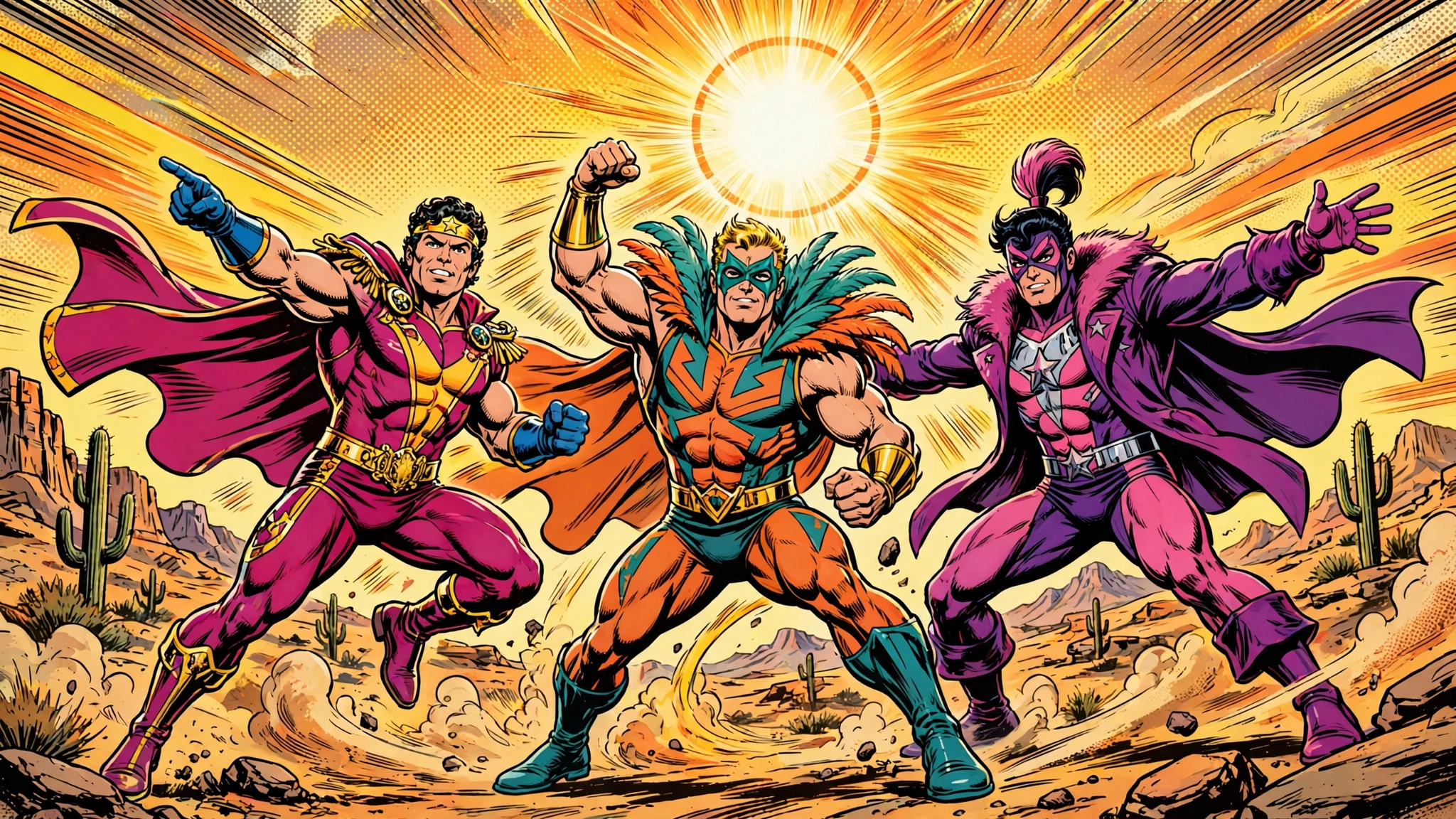
JoJo’s Bizarre Adventure Books in Order is the guide every new reader needs, because this is not one story. It is nine stories, written by Hirohiko Araki since January 1987, spanning more than 130 collected volumes and over 100 million copies in print. Each part follows a different protagonist named JoJo, connected by the Joestar family bloodline, and each part has its own genre, setting, and tone. Part 1 is gothic Victorian horror. Part 2 is World War II pulp adventure. Part 3 is a globe-trotting supernatural road trip. The reading order is still simple, but the structure is unusual, so this guide maps all nine parts, explains the universe reset, and tells you where to start.
JoJo is split across two continuities: Parts 1 through 6 form one continuous story, a multi-generational feud between the Joestar family and Dio Brando, while Parts 7, 8, and 9 take place in a different universe, rebooted after Part 6. You read them in publication order either way, but knowing about the reset stops the biggest confusion new readers hit around Part 7.
JoJo’s Bizarre Adventure Books in Order: All Nine Parts
- Part 1: Phantom Blood (1987-1988). Jonathan Joestar in 1880s England. His adopted brother Dio Brando becomes a vampire with the help of an ancient Stone Mask, and Jonathan fights him with the Ripple, a breathing technique that channels sunlight. Short, melodramatic, and the foundation of everything.
- Part 2: Battle Tendency (1987-1989). Joseph Joestar, Jonathan’s grandson, in the 1930s. He fights the Pillar Men, an ancient race responsible for the Stone Mask, in a globe-trotting pulp adventure. Joseph is the most charming protagonist in the series.
- Part 3: Stardust Crusaders (1989-1992). Jotaro Kujo, Joseph’s grandson, travels from Tokyo to Cairo in 1989 to defeat the returned DIO and save his mother. This is where Stands, the spirit manifestations that define the rest of the series, are introduced.
- Part 4: Diamond Is Unbreakable (1992-1995). Josuke Higashikata in the small town of Morioh, Japan, in 1999. A slice-of-life murder mystery with a serial killer hiding in suburbia.
- Part 5: Golden Wind (1995-1999). Giorno Giovanna, DIO’s son, in Italy in 2001. He fights his way to the top of the Passione mafia family to reform it from within.
- Part 6: Stone Ocean (1999-2003). Jolyne Cujoh, Jotaro’s daughter, in a Florida prison in 2011. The first part with a female protagonist, and the part that ends the original continuity with a universe reset.
- Part 7: Steel Ball Run (2004-2011). Johnny Joestar in an 1890 cross-country horse race across North America. A new universe, widely considered the best-written part in the series. VIZ Media released volume 10 in English on November 24, 2026.
- Part 8: JoJolion (2011-2021). A new Josuke in a rebooted Morioh in 2011, suffering from amnesia and hunting for his identity. The longest and most mysterious part.
- Part 9: The JOJOLands (2023-present). Jodio Joestar in modern Hawaii. The current, ongoing part, still running in Ultra Jump.
Where Should You Start Reading JoJo?
Start at Part 1, in publication order. Parts 1 through 6 are one continuous story, and the payoff of seeing Jonathan’s and Joseph’s grandsons reckon with their grandfathers’ legacy in Parts 3 and 4 only lands if you read the early parts first. Parts 1-6 run roughly 600 chapters, and Parts 7-9 add roughly 280 more.
The common alternative is skipping Parts 1 and 2 to start at Part 3, where Stands begin, but you lose the family history that gives Parts 3 and 4 their weight. A middle path is reading Parts 1 and 2 quickly as a prologue, then slowing down from Part 3 onward. Either way, do not skip around: each part builds on the last, and the universe reset after Part 6 only matters if you read what came before it.
Which Parts Has the Anime Adapted?
David Production has adapted Parts 1 through 6 as anime, and those six seasons are the easiest way into the series if you prefer watching. Parts 7, 8, and 9 are manga-only for now, which means the second half of the saga, including the widely praised Steel Ball Run, can only be read. That is the main reason a reading-order guide matters for JoJo: sooner or later, every anime fan has to switch to the manga, and the switch point is the end of Part 6.
How to Buy JoJo’s Bizarre Adventure in English
VIZ Media publishes JoJo’s Bizarre Adventure in English, and the editions vary by part. Parts 1 through 3 are available in the JoJonium hardcover collections, three volumes per part, with Araki’s own notes and larger art. Later parts come in standard paperback volumes, and Steel Ball Run is currently releasing in English, with volume 10 out on November 24, 2026. The series is also available digitally through VIZ’s Shonen Jump service. The physical editions are worth it if you have the shelf space.
Optional Spinoffs Worth Knowing About
Thus Spoke Kishibe Rohan is a series of one-shot stories starring the manga artist from Part 4, collected in two volumes. It is the best spinoff and the only one most readers need. Crazy Diamond’s Demonic Heartbreak, a three-volume spinoff set between Parts 3 and 4, is a fun extra for completists. Neither is required reading, and the main nine parts are fully self-contained without them.
Should You Read JoJo’s Bizarre Adventure?
If you want the most ambitious long-form manga ever published, yes. No other series reinvents itself this completely, this often, and stays this confident doing it. Start at Part 1, read in order, and trust the structure: the payoff for the early parts arrives in Part 3, the payoff for Part 3 arrives in Part 6, and the payoff for all of it arrives in Steel Ball Run. It is a long road, but it is the rare long road where every part is somebody’s favorite.
Leave a Reply